
Warewashing Efficiency: Choosing the Right System for Your Property
Warewashing is one of the highest-cost operational areas in any hotel or resort kitchen in terms of water consumption, energy use, chemical costs, and labour. Choosing the right system from the outset can deliver significant ongoing savings while improving throughput and hygiene outcomes.
Understanding the Main System Types
Commercial warewashing systems fall into several categories, each suited to different volumes and operational contexts:
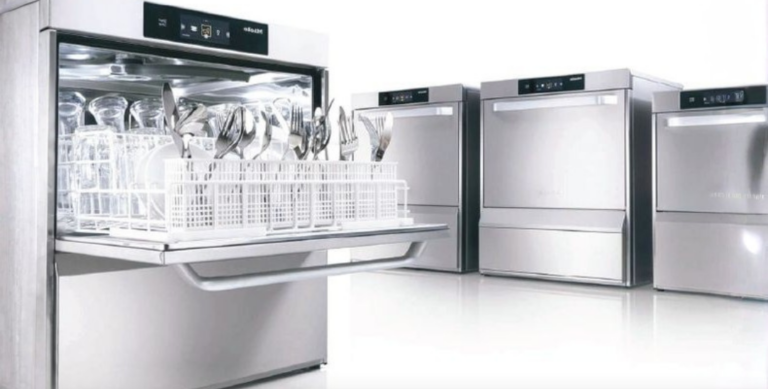
- Undercounter dishwashers suited to low-volume operations such as bar areas, small cafés, or staff dining rooms. Compact footprint, simple operation.
- Hood-type (pass-through) dishwashers the workhorse of mid-size hotel and resort kitchens. Capable of washing 40 60 racks per hour, suitable for most full-service restaurant operations.
- Conveyor/flight dishwashers designed for high-volume operations such as large resort buffets, conference facilities, or central production kitchens. Can process hundreds of racks per hour with minimal labour.
- Pot washers dedicated systems for pots, pans, and gastronorm containers. Essential in any kitchen producing food at volume.
Water and Energy Efficiency
Modern commercial dishwashers have made significant advances in water and energy efficiency. Heat recovery systems capture steam from the wash cycle to pre-heat incoming cold water, reducing energy consumption by up to 40%. Variable-speed pumps and intelligent wash cycle management further reduce both water and chemical usage.
For Pacific island properties where water is a precious resource, specifying a system with a proven low water consumption rating is particularly important. Some modern conveyor systems use as little as 1.5 litres of fresh water per rack a dramatic improvement over older technology.
Ventilation and Installation Considerations
Warewashing equipment generates significant heat and steam. Proper ventilation is essential both for the comfort of kitchen staff and to prevent moisture damage to the building fabric. In tropical climates, this is even more critical.
Hood-type and conveyor dishwashers require dedicated extraction canopies with appropriate airflow rates. Some manufacturers offer integrated condensation hoods that capture steam at the source, reducing the load on the building's ventilation system. These are worth specifying in any climate-controlled kitchen environment.
Chemical Dosing and Hygiene
Automatic chemical dosing systems ensure consistent detergent and rinse aid concentrations regardless of operator variation. This is important both for hygiene outcomes and for cost control manual dosing almost always results in over-use of chemicals.
Ensure that any system specified meets the relevant food safety standards for your jurisdiction. In Australia, this means compliance with the Food Standards Code requirements for sanitisation temperatures or chemical sanitisation. Your local health authority can advise on specific requirements.
Service and Parts Availability
A warewashing system that breaks down during a busy service period creates an immediate operational crisis. When specifying equipment, always confirm that the manufacturer or distributor has a service network in your region and that spare parts are available within an acceptable lead time.
For remote Pacific properties, we strongly recommend specifying equipment from brands with established regional service capability and maintaining a small stock of critical spare parts on-site.
Need Help Specifying Your Warewashing System?
Our team can advise on the right system for your property's volume, layout, and operational requirements.
Get In Touch