
Choosing the Right Hotel Minibar: Absorption vs Thermoelectric vs Compressor Refrigeration
Introduction
A hotel minibar is much more than a convenient place for guests to keep drinks cold — it plays an important role in guest comfort, operating costs and long-term reliability. While most minibars appear identical from the outside, they use one of three very different refrigeration technologies: absorption, thermoelectric or compressor. Each has distinct advantages and limitations in terms of cooling performance, energy consumption, operating noise and installation requirements. Understanding these differences will help you select the most suitable minibar for your property and budget.
Hotel Minibar Refrigeration Compared
Although all three refrigeration systems are designed to cool beverages and snacks, they achieve this in very different ways.
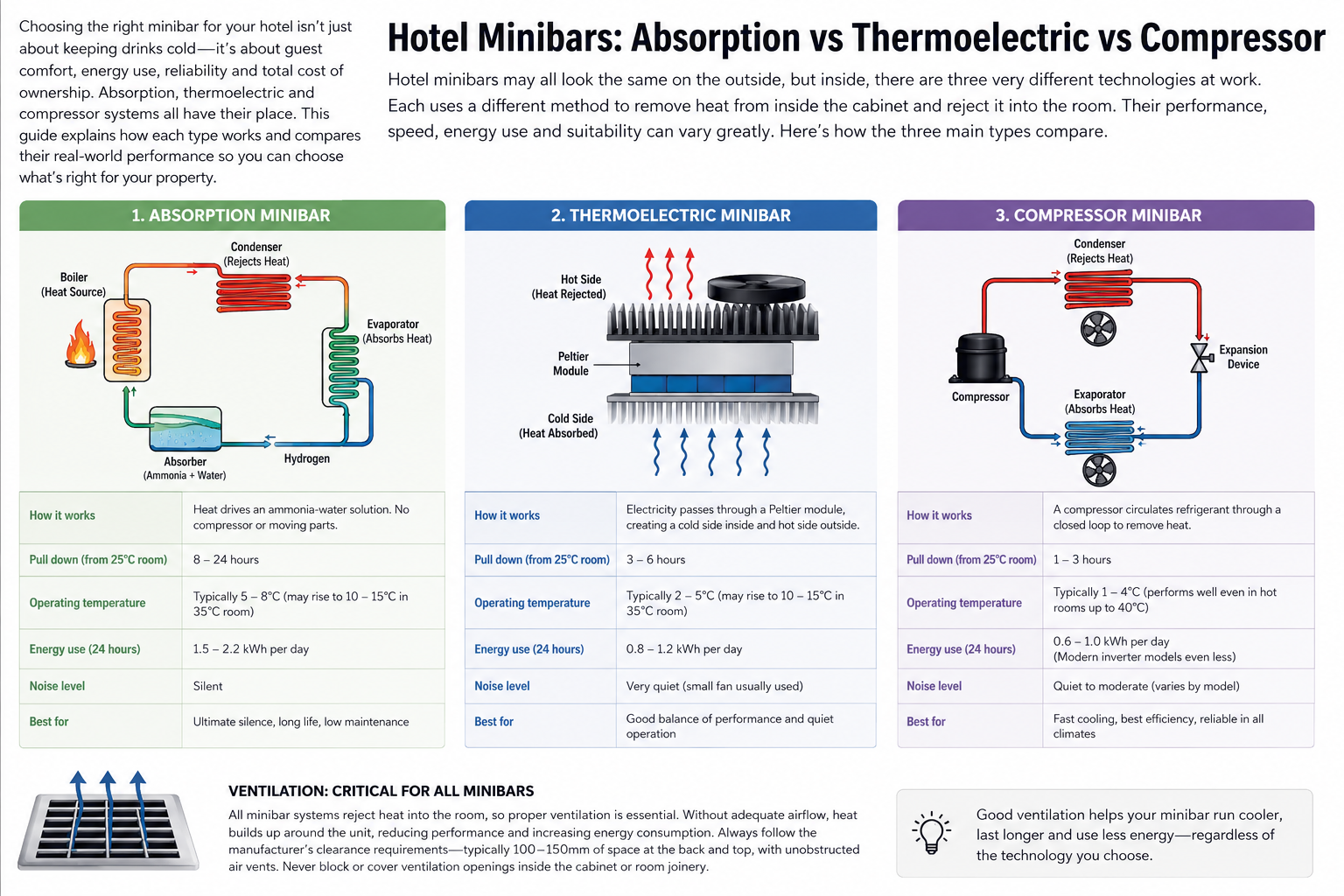
Absorption minibars use heat to circulate an ammonia-based refrigerant without a compressor, making them virtually silent. They typically require 8–24 hours to cool from a 25°C room temperature to an operating temperature of around 5–8°C, although in hot rooms above 35°C they may only achieve 10–15°C. Energy consumption is generally 1.5–2.2 kWh per 24 hours.
Thermoelectric minibars use a solid-state Peltier module with a small, quiet fan. They normally cool within 3–6 hours, achieving approximately 2–5°C under normal room conditions and consuming around 0.8–1.2 kWh per day. They provide a good balance between quiet operation and improved cooling performance.
Compressor minibars operate using the same refrigeration principle found in domestic and commercial refrigerators. They provide the fastest pull-down time — typically 1–3 hours — and maintain temperatures of approximately 1–4°C, even in warmer environments. Modern inverter compressor models are also the most energy-efficient, commonly using only 0.6–1.0 kWh per 24 hours.
Ventilation: A Critical Consideration for All Types
Regardless of the technology chosen, correct ventilation is essential. Every minibar removes heat from inside the cabinet and rejects it into the surrounding space. Without adequate ventilation behind and above the unit, heat becomes trapped, reducing cooling performance, increasing energy consumption and shortening equipment life. Always follow the manufacturer's recommended ventilation clearances and never block airflow openings within cabinetry.
Which Technology Is Right for Your Property?
There is no single best minibar for every hotel. Properties where absolute silence is the highest priority may favour absorption technology. Hotels seeking a balance of quiet operation and improved efficiency may prefer thermoelectric models. Where rapid cooling, consistent temperatures and the lowest long-term operating costs are most important, modern compressor minibars are often the preferred solution.
By understanding the strengths of each technology, hotel owners can select the minibar that best matches their guest expectations, operating environment and budget.
Need help specifying minibars for your property?
Our team can advise on the right minibar technology for your rooms, climate and budget — and manage the full procurement process.
Contact Us