
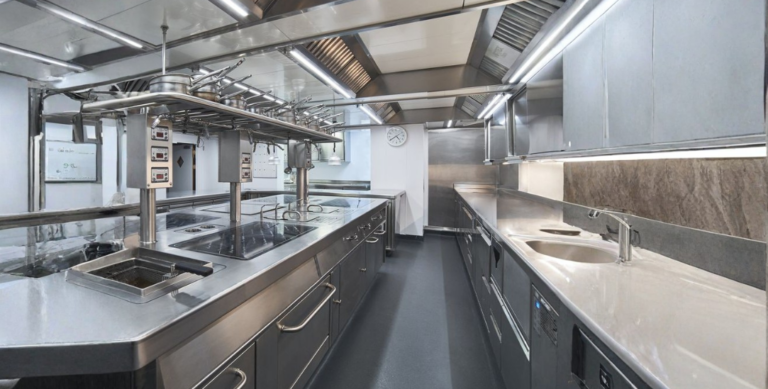
The Case for a Hospitality Equipment Audit Before Your Next Refurbishment
Before committing to a full refurbishment budget, a professional equipment audit can reveal quick wins, identify safety risks, and prioritise spend where it matters most. Yet it remains one of the most underutilised tools available to hotel and resort operators.
What Is an Equipment Audit?
A professional equipment audit is a systematic assessment of all food service and hospitality equipment on a property. It covers the condition, compliance status, remaining useful life, energy performance, and operational suitability of every piece of equipment from the main kitchen through to the bar, buffet areas, staff dining, and any other food service outlets.
The output is a detailed report that categorises equipment as: retain and maintain, repair, replace immediately (safety or compliance issue), or replace at next refurbishment. This gives management a clear, evidence-based picture of the property's equipment portfolio and a prioritised action plan.
Identifying Safety and Compliance Issues
Safety and compliance issues are the most urgent findings of any equipment audit. Commercial kitchen equipment that is not maintained to the required standard creates genuine risks fire hazards from poorly maintained cooking equipment, electrical hazards from aging wiring, and food safety risks from refrigeration that is not maintaining correct temperatures.
An audit will identify equipment that has exceeded its safe operational life, equipment that no longer meets current Australian Standards, and equipment that has been modified or repaired in ways that compromise its safety certification. Addressing these issues before a refurbishment rather than discovering them during a health inspection or, worse, after an incident is always the right approach.
Uncovering Energy Efficiency Opportunities
Energy costs are a significant and growing component of hotel and resort operating expenses. Older commercial kitchen equipment is often dramatically less energy-efficient than current models. A commercial refrigerator from 2010 may consume three to four times the energy of a current equivalent model.
An equipment audit will identify the highest-consuming equipment on the property and model the potential energy savings from replacement. In many cases, the energy savings alone justify the capital cost of replacement within three to five years before any consideration of improved performance or reduced maintenance costs.
Prioritising the Refurbishment Budget
Refurbishment budgets are always constrained. An equipment audit provides the objective data needed to prioritise spending replacing equipment that is unsafe, non-compliant, or consuming excessive energy first, and deferring the replacement of equipment that still has useful life remaining.
This approach consistently delivers better outcomes than the alternative replacing everything in a kitchen because it looks old, or retaining equipment that should have been replaced because the budget ran out before it was assessed.
When to Commission an Audit
The ideal time to commission an equipment audit is 12 18 months before a planned refurbishment. This allows sufficient time to act on the findings ordering replacement equipment, scheduling installation works, and budgeting accurately for the refurbishment scope. An audit commissioned after the refurbishment budget has been finalised is of limited value.
Commission an Equipment Audit
Our team provides professional equipment audits for hotels and resorts across Australia and the Pacific. Contact us to discuss your property.
Get In Touch